

From a new generation fighting for their family resort in the Catskills to a couple trying to build a new life in Mumbai, from sci-fi heists to cozy fantasies, this year’s reading list brought diverse characters and stories across genres. How many of my 2024 reads are yours, too?
Mother Land by Leah Franqui

4 stars. Jewish-American Rachel has recently moved to Mumbai with her Indian-born husband Dhruv after a brief courtship and small city hall wedding. Her friends and family all told her to slow down, but Rachel felt wrapped in the warmth of Dhruv’s sureness, that their move to India would be the beginning of a new adventure. But Rachel feels alone and out of place in her new life—and her feelings of isolation and otherness only intensify when her mother-in-law Swati shows up at their doorstep and announces she will be moving in. The book is told in alternating perspective chapters for Rachel and Swati. I have mixed feelings about this book, but ultimately did enjoy it. I appreciated that both characters showed a lot of growth in the novel—they both come with preset expectations and frankly prejudices about the other, and throughout the novel they find ways to open up to each other and understand each other better. That being said, the novel did make me uncomfortable at times due to the Western perspective on India. Author Leah Franqui is herself an American married to an Indian and living in Mumbai, so it’s hard to say she’s not equipped to tell this story. There is a level of honesty in the way she shows Westerners romanticizing or demonizing India that is frankly off-putting at times. I think ultimately if you stick with the book, she is critiquing these points of view, but sometimes it’s hard to tell if she or the characters are aware of the stereotypes they are demonstrating.
The Wishing Game by Meg Shaffer

5 stars. Jack Masterson is a reclusive and beloved children’s writer who authored the famous Clock Island series and built a real-life replica of Clock Island, where he now lives with his assistant/illustrator Hugo. Jack hasn’t written a book in over a decade, but one day he announces that he will invite four lifelong fans to the island for the opportunity to win the sole copy of the newest Clock Island book. When 26-year-old teacher’s aide Lucy receives the invitation, she’s ecstatic not just due to her love of the series. She hopes to use her winnings to finance her adoption of Christopher, one of her students who tragically lost his parents. The Westing Game for adults—the title clearly makes the connection—Meg Shaffer’s book feels like a warm hug, referencing childhood classics but introducing adult themes, from romance to heartache.
Interior Chinatown by Charles Yu
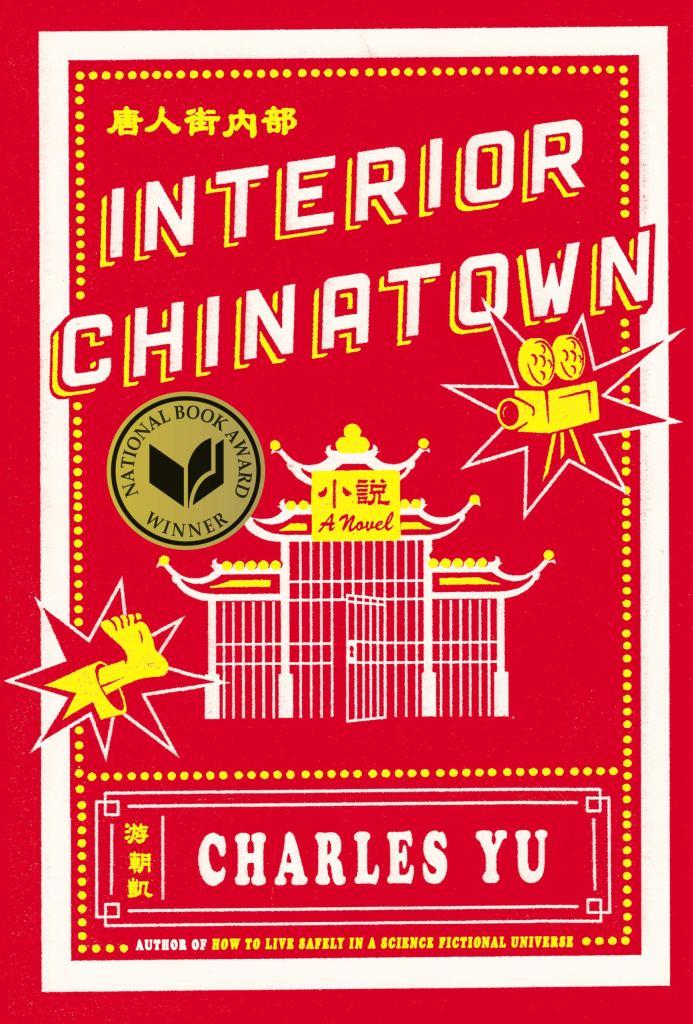
4 stars. Written like a screenplay, Interior Chinatown is a meditation on being Asian in America, using the stock characters played by Asian actors in movies and television—Generic Asian Man, Pretty Oriental Flower, Old Asian Woman, Kung Fu Guy. The interesting thing about the novel is that it works on two levels. It’s a story of Willis playing guest roles on a cop procedural show—or is it? Is he a real actor, or is the whole thing a metaphor for the roles that Asians play in our society, the way they are expected to fit into certain boxes, the danger of stereotypes sliding into realities, and limiting opportunities?
Even in Paradise by Elizabeth Nunez

4 stars. Called “King Lear in the Caribbean,” Even in Paradise is a retelling of the Shakespearean tragedy—in fact, the characters directly reference the play. But that doesn’t take away from the impact of this story of patriarch Peter Ducksworth and his three daughters. Set in Trinidad and Barbados, the novel explores the legacy of colonialism on the islands, covert and overt racism, and familial love and loyalty. Elder daughters Glynis and Rebecca telegraph their love for their father in an attempt to position themselves to inherit his wealth and land. Youngest daughter Corrine loves her father more purely, but is also more honest with him and true to herself, a trait he ultimately can’t stomach. Nunez uses the point of view of two outsiders—Emilie, the black son of Ducksworth’s physician who cares for Corrine, and Alfred, a Lebanese-Trinidadian who falls in love with Glynis—to paint a nuanced picture of both the larger social issues at play and the specific struggles of family and legacy.
Good Omens by Terry Prachett and Neil Gaiman
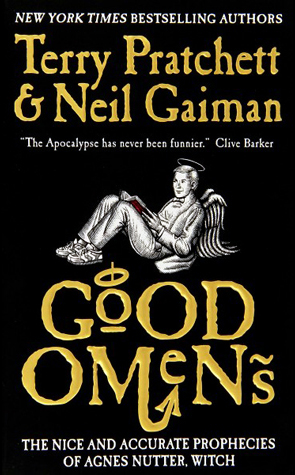
3 stars. An angel and a demon form an unholy alliance to avert the apocalypse and save humanity and the things they enjoy most about this world, namely old books, vintage cars, and a good glass of wine. This is a rare case in which I think watching the television show first detracted from my enjoyment of the book. Usually I prefer to watch a show and then read the book—to me, the book adds detail that the show couldn’t incorporate and fleshes out the world and characters. But perhaps this is a testament to how well the Amazon Prime show was done, because I didn’t find anything new in the pages of Good Omens and ended up feeling, dare I say it, a little bored. Prachett’s wry humor and Gaiman’s imaginative world-building are present in the writing, but one needs only consume the show or the book, not both.
The Sun and the Void by Gabriela Romero-Lacruz

3 stars. The Sun and the Void is set in a fantasy world inspired by the folklore of colonial South America. It alternates between the POVs of two female protagonists. Reina is a half-nozariel (think human with a tail and ridged skin like a crocodile) who has traveled far to live with her paternal grandmother in hopes of finding a place she belongs. Eva is a half-valco noblewoman (girl sporting antlers) who is shunned by her family for her parentage. Despite the potential of the unique premise and world building, I have a few quibbles with the book that took it down a star or two for me. First, I felt the writer was too interested in throwing in five-dollar words. On top of this, a good deal of Spanish is incorporated in the text, but the author often gives no context for what the word means. For example, she’ll say “mora were growing there.” Obviously I can tell mora is a plant, but I’m left with no context of what I should imagine. Is it spiky mora? Red, ripe mora? Poisonous mora? I have seen other languages incorporated into English books effectively, but you have to meet your reader halfway by giving context to the words you choose. Furthermore, there are a fair number of made-up words used too (ex. nozariel, valco), so half the time I’d go to look up a word thinking it was Spanish or an SAT prep word, only to find it was completely fabricated. Suffice it to say I spent too much time trying to decode portions of this book rather than enjoying the story.
Hula by Jasmin Iolani Hakes
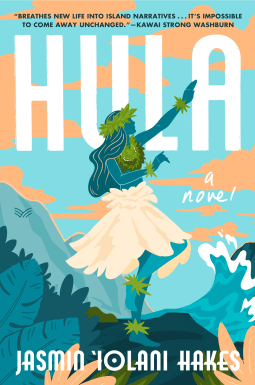
5 stars. One of my favorite books of the year and the one I’ve recommended the most. Hi’i was born into a legendary Hawaiian family known for preserving the art of hula. The matriarchs of the family have advanced native Hawaiian causes since the time of the monarchy and Hi’i is proud of her heritage and wants more than anything to make her mother and grandmother proud of her, too. The problem: Hi’i does not look Hawaiian. With startling red hair and pale skin, whispers of Hi’i’s parentage follow her from birth, many questioning if she is really a part of the Naupka family at all. Hula taught me a lot about the history of Hawaii, but is also just a compelling and heartfelt story about what makes you a family and how we pass on our legacy generation to generation.
Goodbye Earl by Leesa Cross-Smith
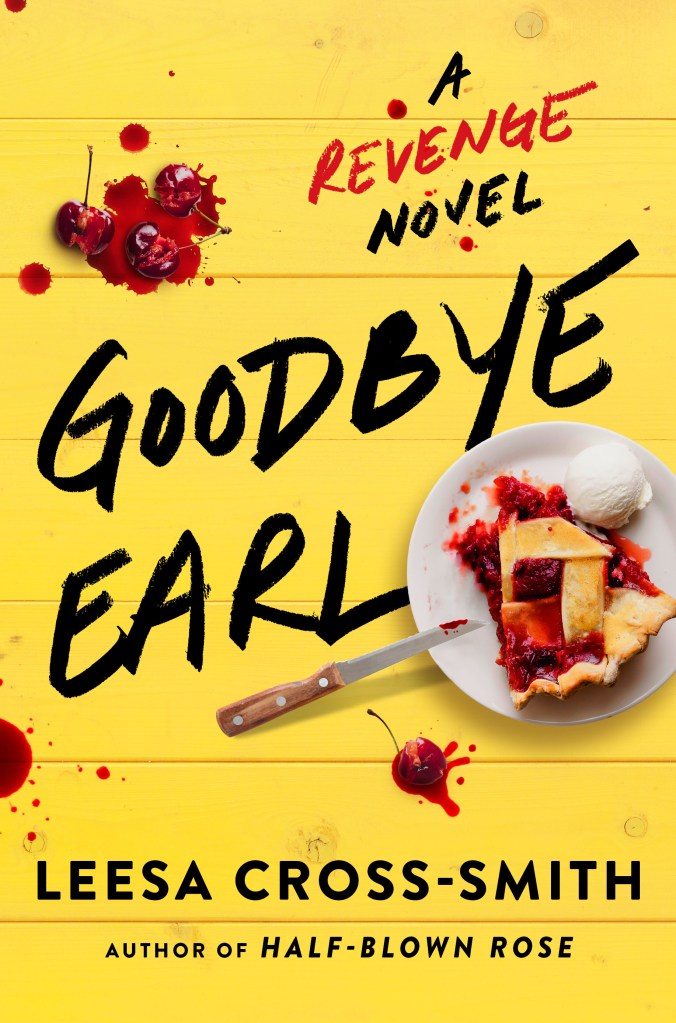
2 stars. Kasey returns to her idyllic Southern hometown of Goldie for the first time in 15 years and reconnects with her best friends over a wedding week. But not all is golden in Goldie as the four friends open up to each other about the struggles in their lives. Goodbye Earl is billed as a “revenge novel,” so I expected it to be more of a dark comedy a la Heathers. But this is not that. The novel is saccharine sweet, spending as much time describing sundresses and pies as physical abuse and attempted murder. The women, or shall I say girls, speak to each other in the most inauthentic, twee way. At least once a chapter, someone has to scream “I LOVE YOU SM BITCH!” (literal quote). It could have worked if their superficial sentiments were a mask to cover their pain, but the novel isn’t that deep. They’re just four friends who speak in all caps and indulge daily with spiked lemonade and cupcakes. There were a few other plot points that had me scratching my head, especially Kasey’s boyfriend Devon, who spends the entire novel back in New York being super sweet and supportive while Kasey flirts with her high school boyfriend out of one side of her mouth and expresses undying love for Devon out of the other. Oh, but we’re supposed to like her and root for this behavior? Her friends tell us multiple times they’re excited about this? This screams Hallmark movie adaptation, and I don’t mean that as a compliment.
Black Cake by Charmaine Wilkerson
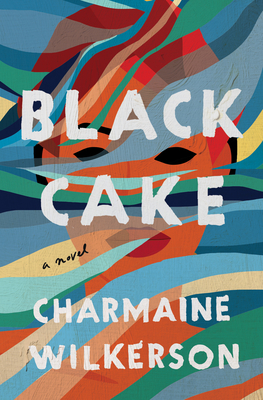
5 stars. Estranged siblings Byron and Benny reluctantly convene in their childhood home in California after the death of their mother to confront their strange inheritance: one of her famous black cakes and a voice recording. In the recording, their mother Eleanor shares her real history, a story she’s hidden from her family for decades. Born in the Caribbean, Eleanor is deserted by her mother at an early age and left with her gambling absentee father whose Asian heritage others him in the community. Told in alternating perspective chapters that bounce from the present to the past, Black Cake is an immersive and compelling story of family bonds, overcoming hardships, and staying true to who you are.
Rich People Problems by Kevin Kwan
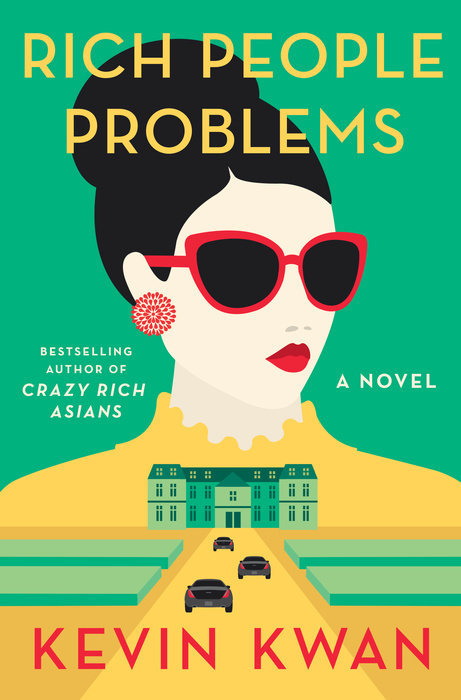
4 stars. From the author of Crazy Rich Asians comes the third escape into the lives of the Asian super-wealthy in this globe-trotting romp torn from the gossip pages. Su Yi, matriarch of the Shang-Young clan, has fallen ill and her many children and grandchildren have descended on her storied estate, Tyersall Park, hoping to sway fortune in their direction and win the bulk of her inheritance. But all is not as it seems for this elite Singaporean family. Kwan’s series is pure word candy, perfect poolside reads that transport and entertain.
The Swan Gondola by Timothy Schaffert

2 stars. Set at the Omaha World’s Fair at the turn of the century, The Swan Gondola is a meant to be a love story between hopeless romantic, ventriloquist, and con man Ferret and the mysterious actress he spots at the fair, Cecily. This book could have benefitted from a hefty edit. I had a very odd relationship with it in which I never felt motivated to pick it up, but then when I did I would think “this writing is pretty good, why aren’t I more interested in reading this?” I think Schaffert is a strong writer with some good ideas, but his execution is painfully slow and overwritten. The core plot of the book is interesting, but there is so much atmospheric padding that you find yourself floating along on a story that doesn’t seem to be going anywhere. With better pacing, this could be good.
Titanium Noir by Nick Harkaway

3 stars. This book lives up to its name, a moody noir with sci-fi flair. Cal Sounder is a private detective for hire with a speciality: dealing with crimes that involve Titans. Rich, beautiful, and ageless, Titans have been dosed with a miracle drug that extends their lives and cures almost anything, but also makes them physically massive, creating an upper class of larger-than-life billionaires. Not many cops want to deal with these eccentric, huge, and filthy-rich characters, so Cal takes the case, quietly investigating. This time it’s a murder of an outsider in the Titan community, a scientist and professor who mostly kept to himself and lived quietly. Detective stories are a bit out of my usual oeuvre, which is probably why I felt this was 3 stars instead of 4, but I overall enjoyed this one and think you will too if sci-fi who-done-its are your thing.
A Wizard’s Guide to Defensive Baking by T. Kingfisher

4 stars. T. Kingfisher is fast becoming one of my favorite modern fantasy writers. She specializes in nostalgic tales that remind one of the books you loved in childhood, but always bring something fresh and are eminently readable. This one stars Mona, a 14-year-old wizard whose magic only works on bread. Mona is completely happy using her gift to produce particularly good scones or bring the odd gingerbread man to life to entertain the customers in her aunt’s bakery—until one day she find a girl dead on the bakery floor and finds herself embroiled in a potential coup and plot to drive magicians from the city by fear or force.
Red Side Story by Jasper Fforde

4 stars. We’ve waited 13 years for the sequel to Jasper Fforde’s Shades of Grey, and at last it has arrived! For the uninitiated, this series is set in a society in which each citizen can only perceive one color, and their color vision serves as a sort of caste system, with Greys on the bottom and Purples on top. We return to the story of Eddie Russett and his companion Jane Grey as they navigate the politics of Red Sector West trying to glean more about the Something that Happened. I must compliment Fforde on crafting an ending that answered a lot of the questions he set up in book one, while still leaving room for a third installment in this series. The book is a return to his signature wacky realism, in which the implausible is presented in such a rational way that you find yourself nodding (and smiling) along.
This Is How You Lose the Time War by Amal El-Mohtar and Max Gladstone

4 stars. The unique structure of this sci-fi love story make it worthy of contemplation and discussion—a great book club pick. It’s an epistolary novel, meaning it’s written as a series of letters, with the addition of a vignette to accompany each. The two letter writers are Red and Blue, agents of Agency and Garden, two warring societies battling across time. As they cross paths in the time stream, Red and Blue begin to fall in love from afar, and their relationship blossoms through their letters. Each character is penned by a different author, and El-Mohtar and Gladstone started the book with an outline of the story they wanted to tell, but let the emotion and details unfold in real time as they traded their letters back and forth, just like our characters.
The Morningside by Téa Obreht
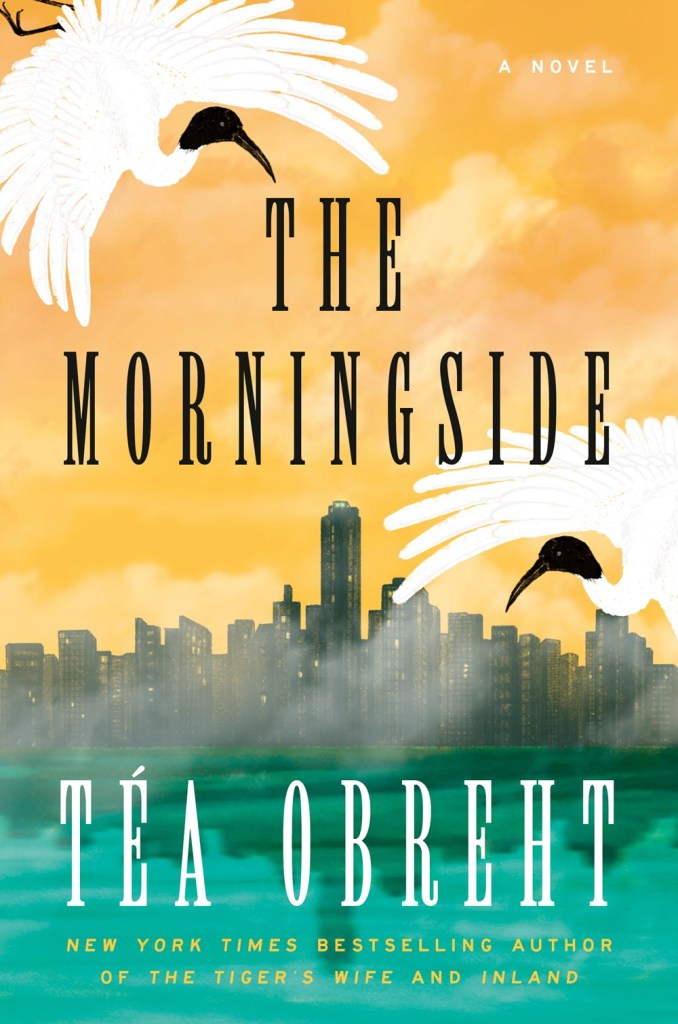
4 stars. Silvia and her mother move to the Morningside building in what was once New York City as part of the Repopulation Project, which is offering a fresh new townhouse on South Falls Island (once they’re built, of course) to those willing to move into the flooded remains of the Island City and attempt to reclaim what climate change has destroyed. While Silvia’s mother works as a superintendent for the building, Silvia becomes obsessed with the tenant in the penthouse, the enigmatic Bezi Duras, a reclusive artist who disappears into the deserted streets of the city each night with her three giant dogs. Inspired by stories of Back Home, Silvia believes there is more to Bezi than meets the eye and begins to investigate. The book feels like an easy slide from now to this post-apocalyptic world that’s still populated with corrupt government agencies and opaque immigration policies. It feels oddly plausible, showing a future in which people go on, adapting and changing to a collapsing world, but remaining ultimately human.
Biography of X by Catherine Lacey

4.5 stars. A book that defies classification, Biography of X is a meta-fiction set in a world in which the South seceded from the North after World War II and became a fascist theocracy separated from ultra-liberal North by a wall. X, the titular character, is an avant garde artist working in the North in the 1960s-1990s, a writer, artist, and filmmaker most known for making her own life a performance piece, taking on false identities and inhabiting characters for months or years unbeknownst to the people she interacts with in those times. Her ability to so fully inhabit her characters calls into question every detail about X. Her past is completely unknown, another series of fabrications. After her death, her widow C sets out to write an unauthorized biography of her wife, starting with unearthing her past and interviewing her former wives and lovers. I’m still thinking about this book, the questions it raises about identity and the commentary that feels oh-so-prescient to our time.
Last Summer at the Golden Hotel by Elyssa Friedland

4 stars. A fun, light-hearted summer read with classic Northeast vibes. The iconic Golden Hotel is a bastion of Catskills charm, a summer escape that replaces the hustle of the city with shuffleboard courts, overflowing platters of brisket and borscht, and eagerly awaited annual competitions that spark rivalries across generations. The Goldman and Weingold families built the resort in the 1960s and enjoyed many storied summers, but as the next generation has taken over management of the hotel and the allure of the Catskills has faded, The Golden is struggling to hold on. The members of the two families gather at the resort to discuss a potential sale to an investment firm that plans to build a casino. Along the way, old and new romances are kindled, secrets are unearthed, an ambulance and the fire department must be summoned, and everyone partakes in goat yoga.
The Saint of Bright Doors by Vajra Chandrasekera
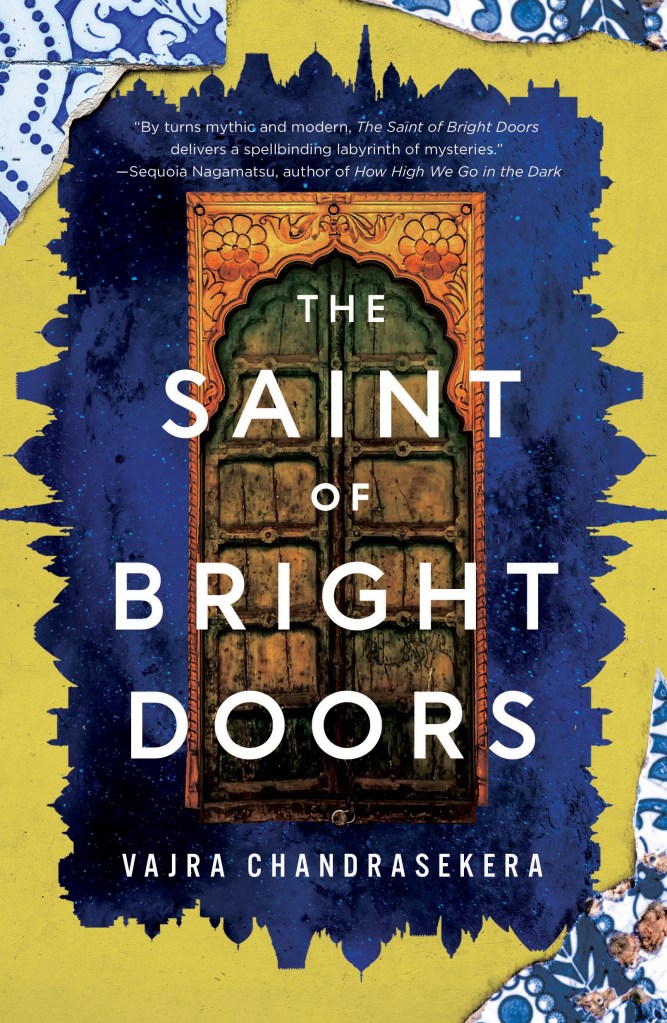
4 stars. This urban fantasy is set in a world inspired by South Asia and particularly the Buddhist stories of Sri Lanka. Fetter, son of Mother-of-Glory and the Perfect and Kind, is torn from his shadow at birth and blessed or cursed with the ability to see demons. His mother raises him with one purpose: to kill his father, the religious leader of a fanatical cult. But though Fetter is meant to be Chosen, he chooses to be Unchosen, moving to metropolitan Luriat and joining a support group for other Almost Chosen. Fetter becomes interested in a feature unique to Luriat: Bright Doors that appear as if by magic. They cannot be opened and seemingly lead to nowhere, but Fetter feels a faint wind under the doors and strange sounds from the other side. As Fetter seeks to understand the Bright Doors, he must reckon with the violence and injustice of his world, from religious-sanctioned pogroms to massive refugee prison camps. This story was unique, the world-building rich and fresh, the events all-too real and frightening despite the presence of the super-natural.
The Art Forger by Barbara A. Shapiro
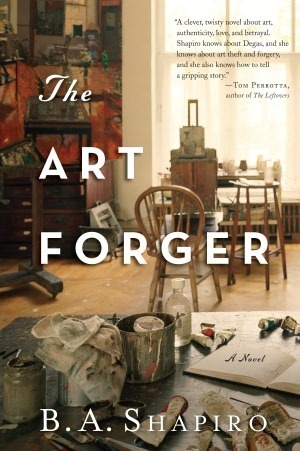
3.5 stars. Claire is a recent art school grad who has become a pariah in the art world after an affair with her famous professor led to questions over the authenticity of his work. Now, Claire makes ends meet producing high-quality reproductions of famous works for a reputable online store—while hoping her original pieces will someday find an audience. However, one of the top gallerists in Boston is about to ask her to do something far from reputable: produce a perfect copy—a forgery—of Degas’s After the Bath, a work stolen from the Isabelle Stewart Gardner museum in 1990 that has now resurfaced. Though it’s not necessary to have visited the Isabelle Stewart Gardner Museum to appreciate the book, it certainly helps bring the story to life. This Boston museum is incredibly unique, set in a architectural curiosity that resembles a Venetian palazzo. The story has a mystery at its heart, but also ambition, romance, and a healthy dose of art history.
VenCo by Cherie Dimaline

3.5 stars. A mysterious silver spoon is Lucky St. James’s invitation to join a coven, but only if she can find the seventh witch to complete the circle. Lucky embarks on a road trip from Toronto to Salem to New Orleans with her grandma Stella, bonding with the other members of the would-be coven and encountering other magical persons along the way who help her in her quest to find the last witch before a man who has hunted them for centuries does. I really enjoyed the core themes of found family and female empowerment, but there were elements of this story that felt out of place, particularly the way the male antagonist uses sex as a weapon. It just didn’t seem necessary to this world and for this story, which is about Lucky’s discovery of her magic and quest to complete her coven. There were a few other elements of the story that distracted me. Dimaline places Lucky and the witches on an urgent timeline to find the last witch, but then lets them spend inordinate amounts of time napping or driving. Why drive 18 hours when your future is ticking away? Still, I’d recommend VenCo as a light witchy read.
Artemis by Andy Weir

4 stars. Andy Weir has got accessible science fiction on lock. If you enjoyed The Martian or Project Hail Mary, you’re sure to enjoy his latest. Jazz has spent the majority of her life as a resident of Artemis, the first and only lunar city. Despite her father’s protestations that she could do anything, Jazz has chosen a life of light smuggling in an effort to get rich. And by rich she means able to afford an apartment with its own bathroom and a cook station. Anything bigger than the coffin-like sleep capsule she currently calls home. So when Jazz gets an offer from a billionaire that would ensure her future but is going to involve risking her life and exploding a few things, she can’t say no. Weir’s prose clips along with wit and sarcasm, and he writes in a way that endears you to his characters. As in his other books, he often spends a bit too much time explaining things like air pressurization systems, but I’ll let it pass for the fun of this lunar heist gone wrong.
Scattered All Over The Earth by Yoko Tawada

3.5 stars. Hiruko is a climate refugee from Japan, a country that no longer exists. Now living in Denmark, Hiruko has invented her own language, Panska, a blend of many Scandinavian languages, to help her communicate as she tries to find a country that will allow her permanent residence. A young linguist, Knut, becomes fascinated with Hiruko’s languages: both her invented one and her mother tongue, which has all but disappeared from the Earth. The two hear rumor of a native speaker living in Germany working as a sushi chef and decide to travel to meet him. Along the way, others join the group, each for their own reasons. Overall I enjoyed this book, but the plot is very episodic. It’s very language driven and almost a love story without any romance. It gave me the feeling you get when you see a piece of art that you like but you can’t quite say you understand it.
The Rabbit Back Literature Society by Pasi Ilmari Jääskeläinen
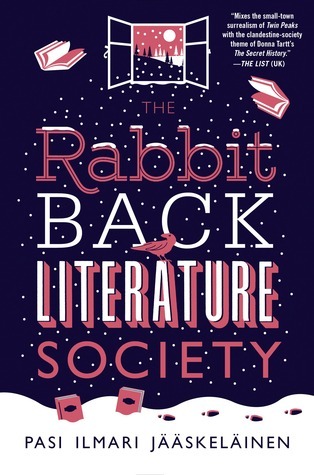
3.5 stars. Substitute literature teacher Ella is shocked to be invited to join the prestigious Rabbit Back Literature Society. Founded by famed children’s author Laura White, the society has admitted only nine members in its history, and all have gone on to be esteemed names in Finnish literature. Ella will now be the tenth and final member of the society. But on the night of her induction, Laura White mysteriously disappears, leaving Ella’s fate in question. Ella begins to learn about the society as the other members stalk her and introduce her to The Game, a secret ritual they use to mine material for their writing. The Rabbit Back Literature Society defies classification in many ways. There are supernatural elements but it is not a fantasy. It is structured a bit like a mystery, but some questions are left unanswered. The society’s rituals give dark academia vibes but the characters also demonstrate kindness. It’s a bit of an odd duck, and I enjoyed that.
The Mistletoe Mystery by Nita Prose

2 stars. I enjoyed Prose’s debut, The Maid, so I picked up this holiday novella hoping for a light-hearted seasonal read. My hopes were dashed. I truly don’t think I’m spoiling the story by sharing this, because it’s telegraphed so explicitly throughout the story and the only person in the dark is clearly Molly the Maid. The Mistletoe Mystery is a short Christmas story about Molly getting engaged to her boyfriend Juan Manuel. It is 50% Molly gushing about how wonderful Juan Manuel is and 50% Molly worrying that Juan is stepping out on her after noticing some “suspicious” behavior. I confess I wanted fluff, but this is pure hot air. There’s really no there there in this story.
What was your favorite book of 2024? What book are you adding to your list for 2025?
 Caitlin Kenney Smith